

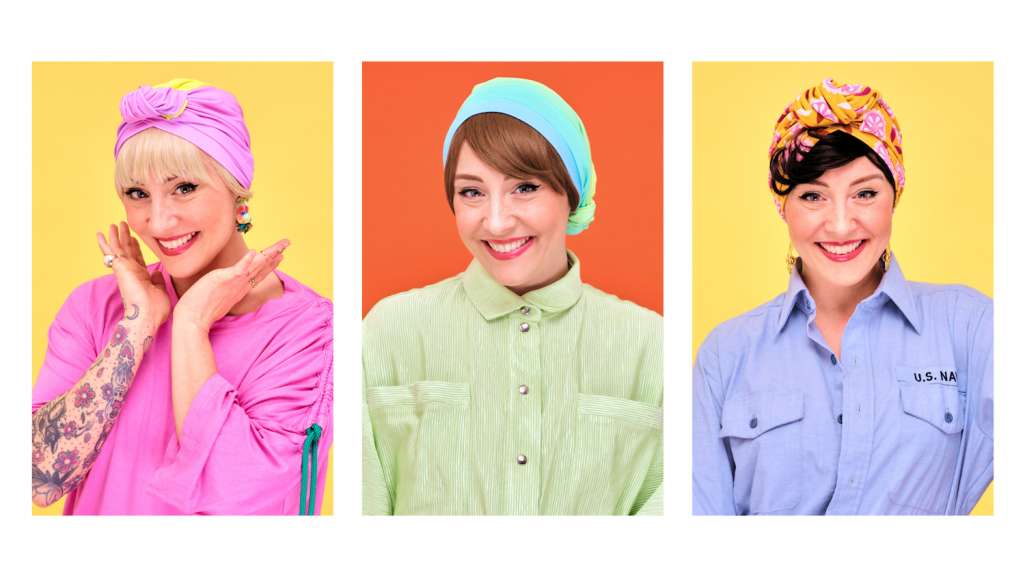
Losing your hair is far from a pleasant experience, I’m not telling you anything new… While some people do everything they can to hide it, others see it as an opportunity to try new things. You know I definitely belong to the latter category, and that I am a staunch defender of style rights. I will always tell you to try looks that make you happy! However, if you want to avoid the pitfalls of a sallow complexion and looking tired, here is my advice on how to choose the right color for your alopecia hairpiece and look radiant in all circumstances (What? You’re a ray of sunshine, aren’t you?).
Let me stop you right there—I’m not going to act like the Queen of Magnifaïk! This is not about giving you a head-to-toe makeover without asking for your opinion or taking your personality into account. I simply want to share a few very simple tips that can make all the difference.
Color analysis is a method that helps determine which colors naturally suit your complexion when you are not wearing makeup or colored clothing. Ideally, to avoid skewing the results, you should wear black or white clothing to neutralize your complexion as much as possible, and pull your hair back (if you still have any), especially if it is colored, so that the focus remains exclusively on your beautiful face.
Knowing your color analysis helps you discover which colors to favor around your face, namely colors for:
To find out your color analysis, you need to have a draping test, which is a test using colored scarves. This test is offered by image professionals, such as image consultants. Also, if you receive sessions with a socio-aesthetician as part of your care plan, many of these little fairies are trained in this.
Positioned facing (no, not at the beach! Come on, I know you know the reference ;)) the mirror, the professional places colored scarves around your bust in a very specific order to test how your complexion reacts to the different colors. The test then gives you a result that provides guidance on the colors to favor, so it is ideal for choosing the right color for your alopecia hairpiece.
Warning alert number 1: this test is valid at that moment; the result may differ six months later (there are many factors that influence our complexion on a daily basis: fatigue, hormones, pollution, medication, sunlight, etc.).
Warning alert number 2: a blonde person with blue eyes may have the same result as a brunette with black eyes, which is why there are no generalizations, and why you cannot know your colors without taking the test. (Sorry, I know you would have liked me to tell you today which colors were meant for you).
The test thus offers you 4 results, in the form of seasons:


I can already hear you coming: “But Julie, what is a light, dark, warm, or cool color?”
Don’t panic, here is a little technique to help you:
Color analysis is a useful tool for everyone, all the time! However, it is a truly valuable ally during the treatment period. Indeed, fatigue, chemotherapy, the loss of eyelashes, hair, eyebrows… are all factors that impact our image. Our complexion is different, our dark circles may be more pronounced… We may look pale or even suffer from intense redness. All of this can be softened, or even erased, simply by wearing the right colors… great, right?
Likewise, color analysis is your best friend on the days when you don’t have the strength to put on makeup: choosing one color of t-shirt over another can make you look better in no time!
Okay, I know, you may not necessarily have the opportunity to consult an image professional, which is why I am presenting a few little tips to help you choose the right colors.
As a general rule, Mother Nature does things well. Okay, I know she still messes up quite often, but when it comes to style, we can trust her.

Before choosing the right color for your alopecia hairpiece, remember your natural hair color. If you were more of a blonde with golden highlights, then you naturally have a warm and light hair color: you can treat yourself to warm and light colors like the lovely red of our Sophia hairpiece or even a Brigitte Bardot-style golden blonde. If your hair was more of a cool blonde, avoid all warm highlights (bye-bye red and copper) and avoid wearing colors that are too dark, like raven black. You can, for example, turn to our Jodie or Kate hairpieces.
The following advice applies to choosing the colors of your hairpiece, but also to choosing your eyeshadows and other pencils. To bring out your beautiful eyes (Biche, ô ma biche… I hope you have the song in mind now, it’s on me!), I advise you to play with complementary colors.
Do you have blue eyes? Blue is the complementary color of orange. For your hair and makeup, turn to warm colors containing a hint of copper: red hairpieces and auburn hairpieces are ideal for you.
Do you have green eyes? Green is the complementary color of purple. All colors with a hint of purple, plum, or even red (hello Jane!) bring out your beautiful gaze.
Do you have brown eyes? In this case, there are no colors to favor over others. Test them and see what you like (here is the link to all our hairpieces)!
A little note about your eyebrows: if you wear makeup on them, you can choose a pencil (or any other eyebrow product—personally, I love Même’s eyebrow pen, which also comes with stencils!) in the same shade as your hair. If you choose different colors for your hair and eyebrows, I advise you to choose an eyebrow color darker than your hair color.
Do you have very fair skin? Very dark colors may harden your features, and colors that are too light may blend in too much. Make sure your hair color differs from your skin tone color to avoid looking tired.
Do you have rather dark skin? Hair colors that are too light could give you a gray and dull complexion.
You can also try to identify, by observing yourself in the mirror in natural light, whether your skin tone includes more pink shades (so cooler) or yellow shades (so warmer). Match these shades with your hair.
This article contains only advice, under no circumstances any obligations. Personally, I hate being told what to do when it comes to looks and image. What matters most of all? Pleasing yourself and feeling good.
Nothing stops you from taking an afternoon to play New Look for a New Life, accompanied by your best friend, your mother, your son, your daughter, your boyfriend, your girlfriend… Try, test, experiment, and start over until you find the colors that make you feel good inside and out. Don’t forget that colors are also a reflection of our personality and our emotions: see how you feel wearing one color over another.
Does this color give you energy? Do you feel beautiful (sexy?!) in it/with it? Are you ready to conquer the world with it? (yes, like Minus and Cortex, come on, tell me you know that reference too :))
One last point: some colors may suit you perfectly, erase your dark circles, soften your redness, smooth your wrinkles… if you don’t feel good in them, there’s no point… Next! Move on, please yourself above all else, and above all: listen to yourself!
I hope this article has given you a few ideas for choosing the color of your alopecia hairpiece. Once again, if you have the opportunity, don’t hesitate to get a professional’s opinion. Not only will you leave with valuable advice (much more detailed than today’s!), but it will also allow you to treat yourself to some time for yourself and realize everything that enhances your natural beauty. Play with colors, have fun above all else… a little joy and self-confidence can transform a face and improve quality of life—tested and approved! Don’t hesitate to send us your beautiful looks on our social media; we always love discovering and resharing them (with your permission, of course! :))


Delivery everywhere
in the world

Satisfaction
or your money back

Available at 800+
retail locations

24,000+ users
since 2015


